Modernizing critical software infrastructure

The systems your organization runs on have to stay secure, current, and compliant. Bosun reduces risks, improves visibility, and accelerates execution of software modernization projects.

A mainframe hall: rows of tape and disk cabinets, operators working at a shared console.

Effective modernization

Understanding the legacy system, designing the target architecture, choosing slices, migrating, proving behavior, and phasing in the new code. Each stage is unique to the system being modernized. This makes each modernization project a risky endeavor.

Bosun captures the modernization project in a process that follows industry best practices. From functional decomposition, to transition architecture, to behavioral verification to production rollout. Bosun supports and enhances the process each step of the way.

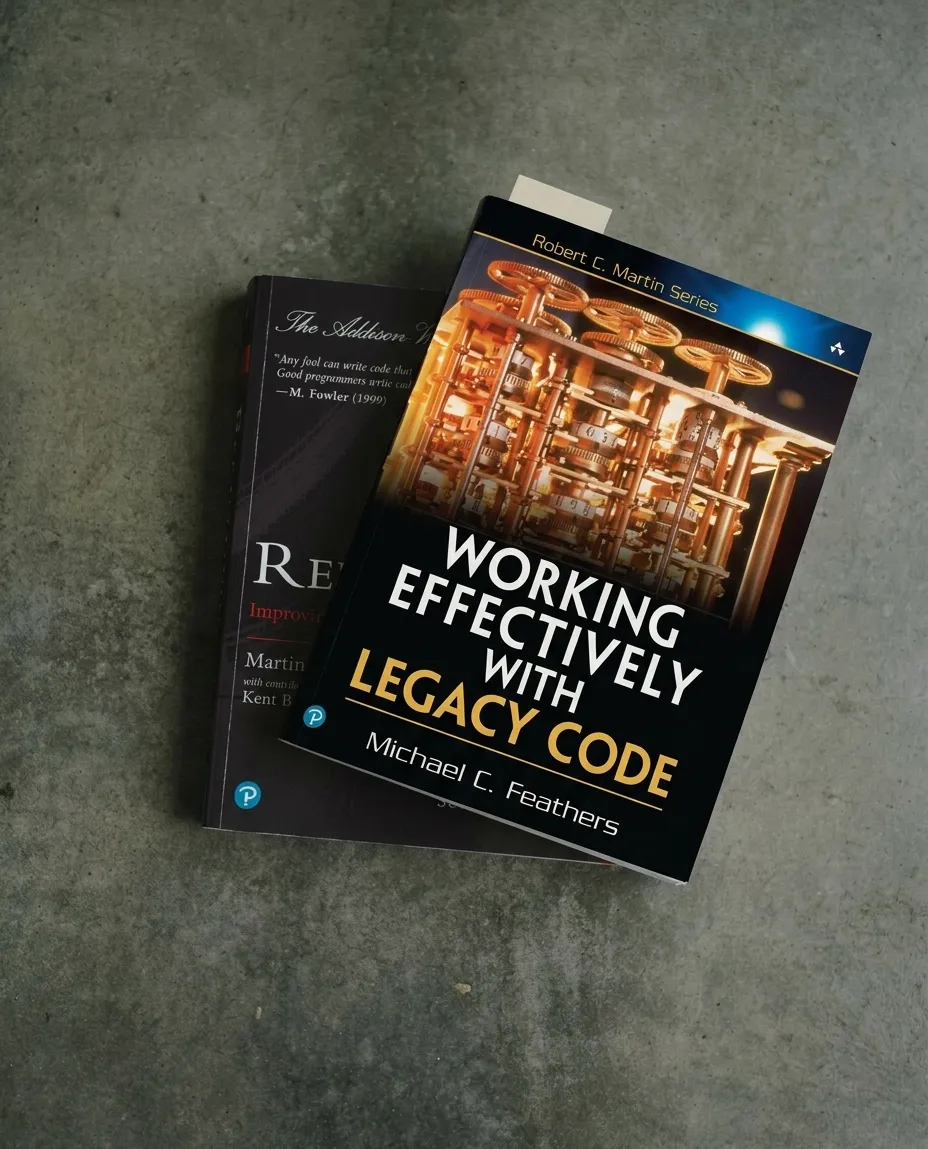
Two books on a concrete floor: Working Effectively with Legacy Code by Michael Feathers, lying on Refactoring by Martin Fowler.

Lowering execution risk.

Before Bosun

Verification is mostly manual. The tests are written by the same engineer doing the migration, so green mostly means that nobody saw a difference.

With Bosun

Bosun introduces automatic deep verification, so each slice moves into use with executable proof of equivalence, whether Bosun’s AI agents or your own engineers did the work.

Replacing an old system is risky. The new one can look right while getting a small detail wrong. It might save an order twice. It might forget to send an update that another system needs.
Introducing Parity, on the blog
At scale, we need to manage risk, which means small sets of change and verified proof.
Netdisco Perl-to-Rust case study

Greater visibility and control.

Before Bosun

The scope emerges along the way. Missing building blocks get built quietly in the middle of a migration, out of sight of the review.

With Bosun

Your organization gets an overview of the work that has to be done, the progress against it, and the rollout.

We also added task breakpoints and a fast retry flow. Great for debugging, you can pause, inspect what happened, and continue with more context instead of starting over from scratch.
Bosun Beta, clearer runs
Draft PRs carried generated code together with user-perspective e2e coverage, decision notes, proof of what ran, known risks, and a reviewer checklist that made the change easy to verify.
Frontend modernization case study

Larger, more complex migrations.

Before Bosun

Every update is its own mini project: discovery, research, the change, verification, and review, repeated by hand for each one.

With Bosun

Bosun compartmentalizes the migration, which lets it take on migrations of great scale and complexity.

Fan out across repositories with consistent context and controls.
Structured Automation, on the platform
The application is spread over multiple repositories, with an asynchronous package release process.
Legacy PHP upgrades case study

Lead time measured in weeks.

Before Bosun

Modernization projects run for months to years, and the work stays ad-hoc: five to six manual tasks, each taking days to weeks.

With Bosun

Bosun increases migration speed by combining agentic AI with novel verification techniques.

Developers no longer need to worry about having to dig through upgrade guides, meticulously comb through the application codebase, or manually perform the changes whilst worrying about testing the application.
Automated React upgrade, on the blog
Reduced burden on senior engineers means the team has greater focus on the core product, new features and customer satisfaction.
Legacy PHP upgrades case study
Start with the system you have.

Tell us what needs to change, what must stay stable, and how your team reviews work today.